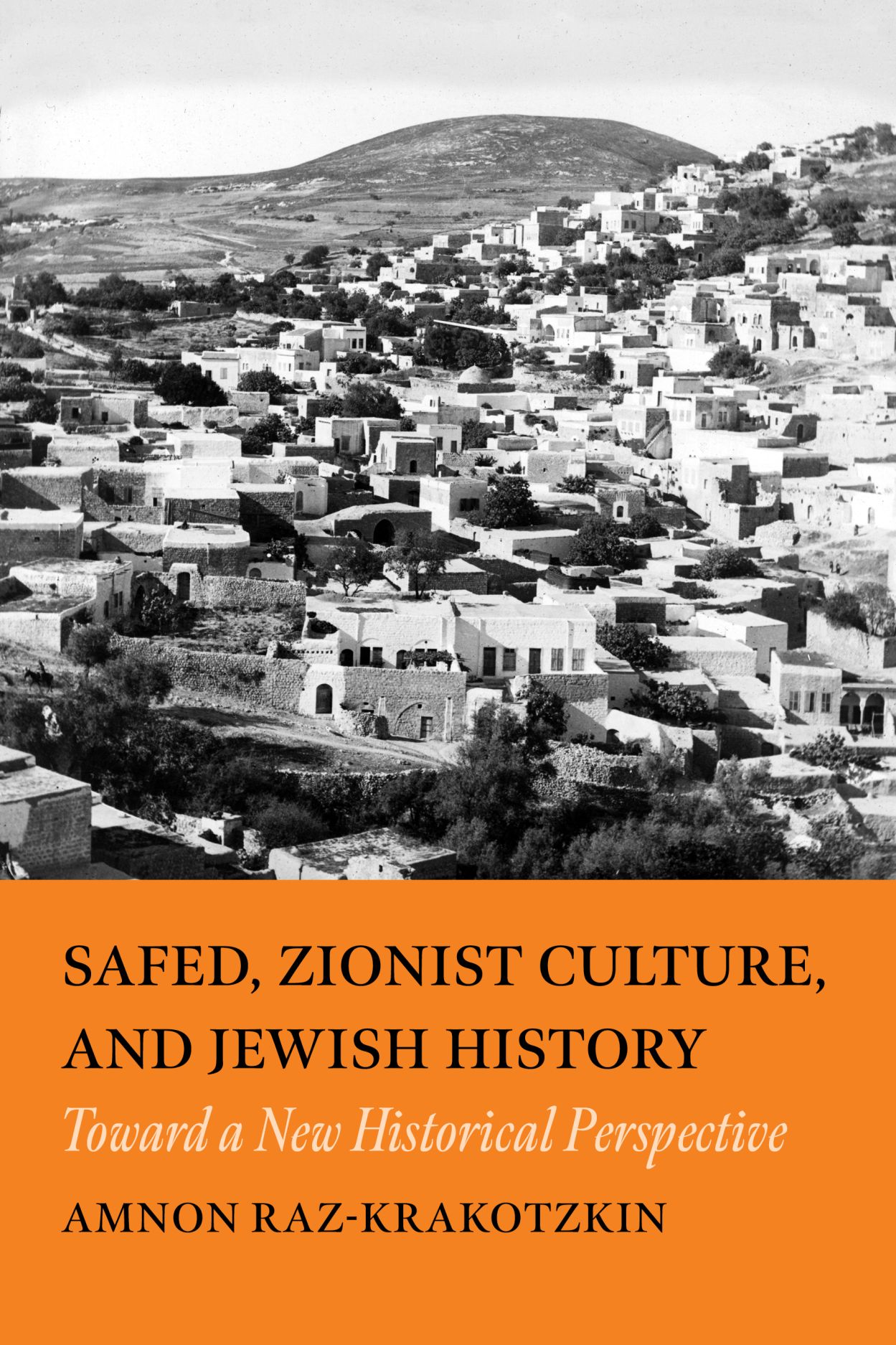
Safed, Zionist Culture, and Jewish History
Toward a New Historical Perspective
Distributed for Brandeis University Press
Safed, Zionist Culture, and Jewish History
Toward a New Historical Perspective
Brings the legacy of sixteenth-century Safed into modern scholarship on Zionism to propose a new model of Jewish existence.
Sixteenth-century Safed was one of the most important centers of thought and learning in Jewish history, yet Zionist historical narratives, which emphasize the continuity of Jewish presence in Palestine, have consistently downplayed or ignored it. Amnon Raz-Krakotzkin investigates this strange contradiction. His new book argues that Safed articulates a model of early modern Jewish national revival, one closely connected to the land and its material geography, yet radically different from the Zionist model that emerged in the late nineteenth century. While Zionism set out to restore Biblical Jewish sovereignty, rabbinic Safed’s emphasis on the Mishnah proposed a non-sovereign Jewish connection to the land.
As much a polemic as a historical and theological analysis, Safed, Zionist Culture, and Jewish History offers a provocative new perspective on questions related to nationalism, Judaism, and Israel.
312 pages | 6 x 9 | © 2026
The Tauber Institute Series for the Study of European Jewry
History: History of Ideas
Religion: Judaism, Religion and Society

Reviews

Table of Contents
Part One
1. Sixteenth Century Safed: A Historical Perspective
2. “The Land of the Tannaim”: The Mishnah in Safed Consciousness
3. The Bible, the West, and Zionism
Part Two: Redemption and Sovereignty
4. Exile and Redemption, Christianity, and Apocalypse
5. The Ordination Controversy and the Question of Sovereignty
Part Three: Safed and Zionism—Encounters and Connections
6. Yehoshua Bin Nun and Rabbi Shimon Bar Yochai
7. Modiin and Meron
8. Traditionalism and the Safed Tradition
9. Between Poetry and Piyut: Haim Nahman Bialik and Israel Najara
10. Safed as an Unrealized Possibility in Zionist Thought
Epilogue: Safed and the Writing of History
Bibliography
Acknowledgments
Index