Distributed for Hong Kong University Press

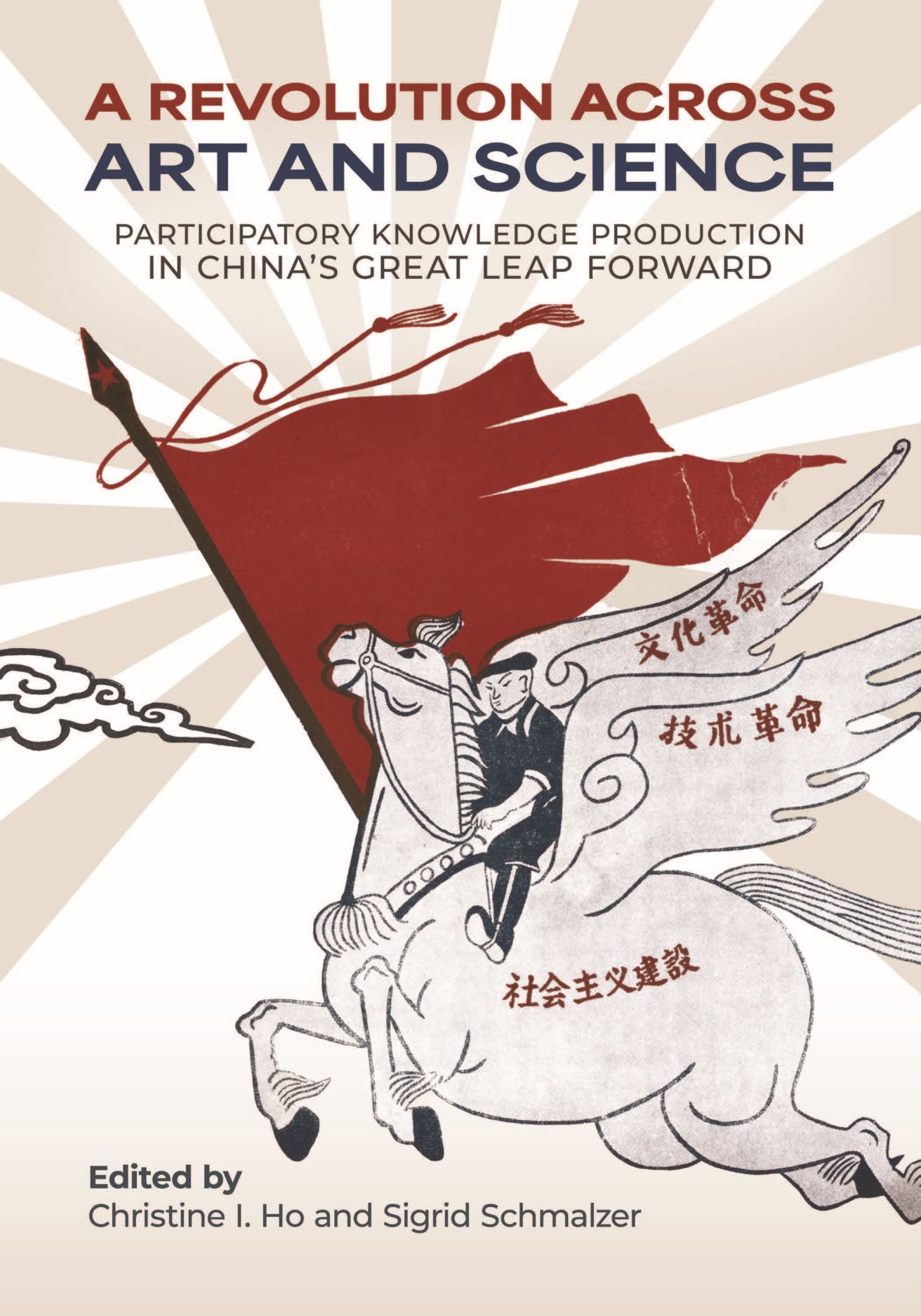
A Revolution Across Art and Science

Participatory Knowledge Production in China’s Great Leap Forward

This volume examines the role of mass knowledge production—whether artistic, scientific, or technical—in China’s Great Leap Forward.

A Revolution Across Art and Science examines how laborers reimagined knowledge during a high point of radicalism in modern Chinese history. Encouraged to become curators, historians, writers, artists, technicians, scientists, and other kinds of experts, Chinese workers and peasants were mobilized to produce new knowledge in the humanities and sciences. Moving beyond the economic questions that have dominated most previous scholarship on the Great Leap Forward, this volume explores the cultural dimensions of the movement to establish the significance of mass knowledge production. Through ten case studies authored by emerging scholars, this volume offers a simultaneously empathetic and critical inquiry into PRC history and its impact on ongoing efforts to democratize knowledge around the world.


236 pages | 12 color plates, 10 halftones | 7 x 10 | © 2026

Art: Art--General Studies

History: Asian History

Hong Kong University Press image

View all books from Hong Kong University Press

Reviews

A Revolution Across Art and Science greatly expands our understanding of China’s Great Leap Forward. While acknowledging the movement’s disastrous consequences, it highlights participatory knowledge production across diverse areas of endeavor—from fisheries and education to pharmaceuticals and visual arts—as an important legacy of the Great Leap Forward. Grounded in meticulous and original research, the volume’s essays make a compelling case for the shared principle of mass mobilization that drove various social actors to undertake exciting experiments, with varying degrees of success.”

Chenshu Zhou, University of Pennsylvania

“What happened when Maoist China invited workers and peasants to participate in the creation of cultural and technical knowledge? The conventional view is that the Great Leap Forward experiment in mass science and mass cultural production was a failure. The ten chapters of this groundbreaking book tell a more nuanced story and do so with just the right mix of empathy and skepticism. In fields ranging from meteorology to biogas production, from folk song composition to mural painting, we see people rethinking the nature of knowledge and challenging the social hierarchies that underpin it. Even if most of their innovations did not survive the Leap, they permanently altered China’s culture of knowledge production.”

Jacob Eyferth, The University of Chicago

Be the first to know

Get the latest updates on new releases, special offers, and media highlights when you subscribe to our email lists!

Sign up here for updates about the Press