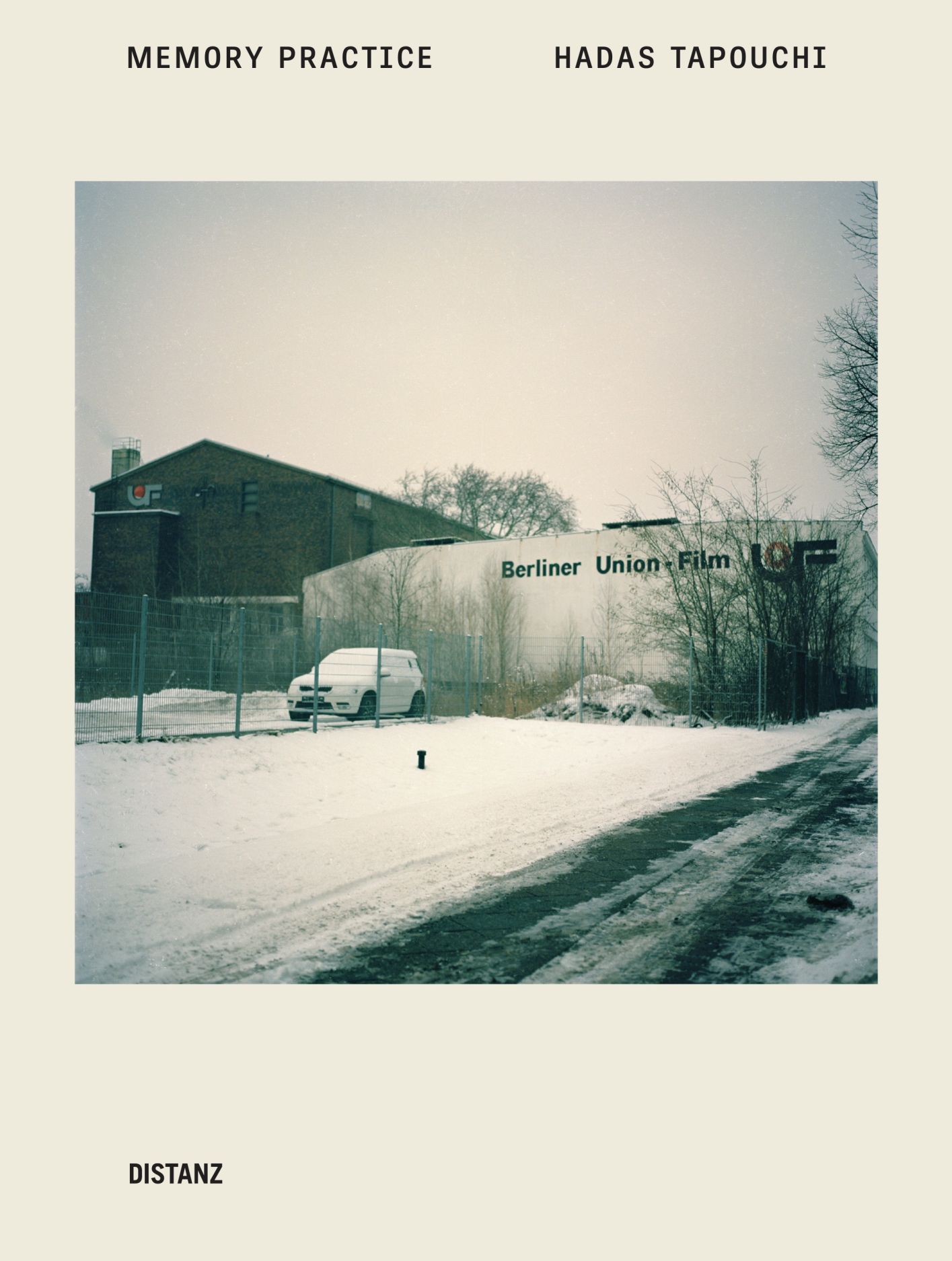
A reflection on historical erasure, the politics of space, and how societies remember—or choose to erase—legacies of violence.
Hadas Tapouchi uses photography, video, and a research-based approach to explore the transformation of urban space and examine how architecture functions as a storehouse of knowledge.
For her new book project Memory Practice, Tapouchi visited the settings of World War II–era crimes and captured their contemporary appearance in discreet photographs. Her pictures reveal how industrial installations where the Nazis used forced labor and other sites of atrocities have been repurposed and now seem to blend seamlessly into the surrounding cityscape. These places—schools, gas stations, public offices, restaurants, cinemas—often serve perfectly ordinary functions today, but their historic significance lingers beneath the surface. The artist has documented these vanishing traces in Berlin and cities and towns across Central and Eastern Europe and Greece since 2014. Covering her past eleven years of research, Memory Practice asks: Which processes of normalization did these sites undergo? How has the anguish caused by violence, coercion, and surveillance become imprinted on contemporary urban and social structures? Or how are such traces covered up, leaving blanks in the collective recollection?