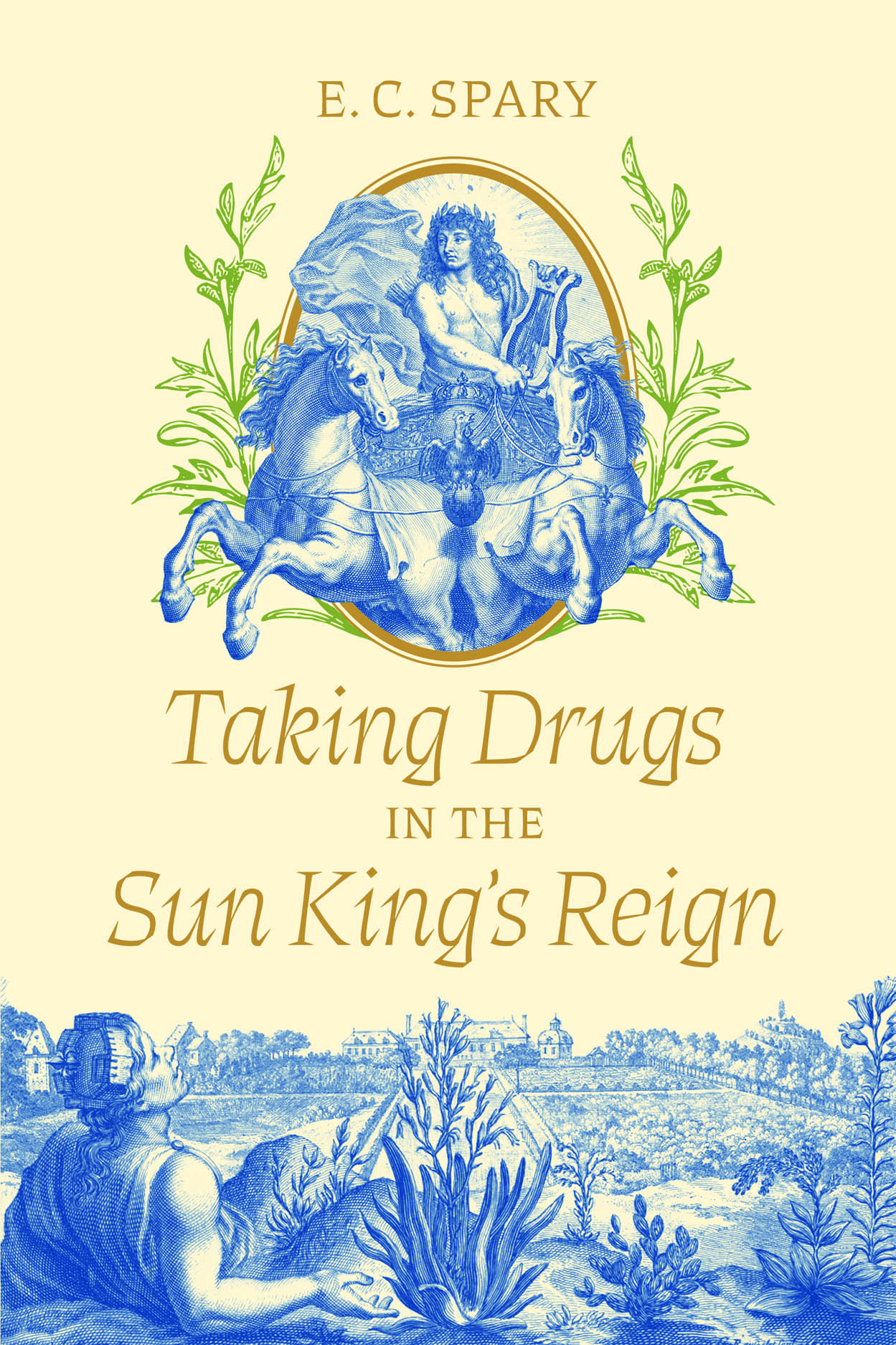
Taking Drugs in the Sun King’s Reign
Taking Drugs in the Sun King’s Reign
The first full-length history of drugs during the first French Empire.
Taking Drugs in the Sun King’s Reign is the story of how the French came to know and consume new non-European plants between 1660 and 1730, a period during which many exotic substances—like coffee, tea, cinchona bark, chocolate, and ipecacuanha—became everyday commodities. E. C. Spary treats the trajectories of these drugs as fragile complexes, made and remade by every exchange. Her book addresses well-known cases, but also drugs that never became popular in France, such as betel.
Taking Drugs is divided into three parts. The first offers a rich depiction of the world of drug-taking and drug-selling in Paris and Versailles at the outset of Louis XIV’s personal reign. The second explores features of monarchical power which explain the “drugs rush” of this period. Finally, the third offers an in-depth look at how priorities for the capture of exotic plant drugs changed within the royal naval administration. It asks how, under the conditions of early modern empires, information about drugs could be made or made trustworthy, who made it, and how it traveled. Spary shows how, over time, drugs transitioned from being natural bodies imbued with mysterious virtues to becoming calculable, replicable sources of profit. Her approach allows for new insights into how political and economic power transformed between the reigns of Louis XIV and his successor, Louis XV.
Reviews

Table of Contents
Introduction
Part I. Approaches
1. Geographies of Virtue
2. The Voyages of an Advertisement
3. An Armenian in Paris
Part II. Court and City Challenges
4. Desiring the Favorite
5. “The Usual Miracles of Cinchona”
6. Altered States: Opium
Part III. Public Virtues
7. Publicity Problems
8. Poisons and Secrets
9. Purging the Body Politic
10. “Mr Mil Drogue”: The Merchant’s Virtue
Part IV. Capturing the Unknown
11. Tributes and Trials
12. “The Closest Possible Likeness to Tea”
13. “We Still Do Not Know the True Plant of Rhubarb”
14. “Indian Secrets” and “European Information”
Conclusion: Translations of Potency
Acknowledgments
Notes
Bibliography
Index