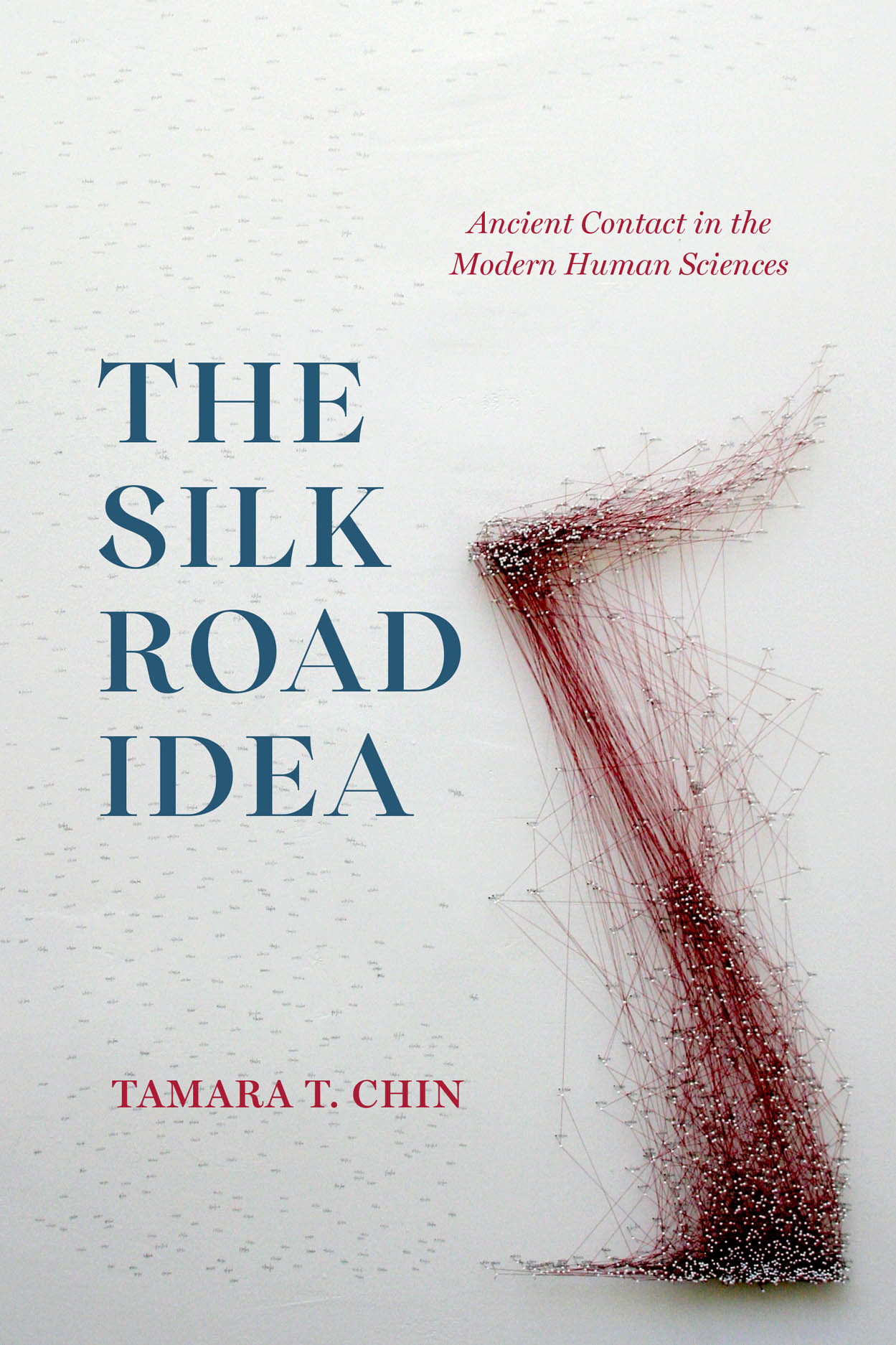
The Silk Road Idea
Ancient Contact in the Modern Human Sciences
The Silk Road Idea
Ancient Contact in the Modern Human Sciences
Traces the rise and fall of a set of modern disciplinary fields devoted to premodern historical contact that drew on intellectual currents across and beyond China and Europe.
The Silk Road Idea examines how the transnational past became a modern object of inquiry. Tamara T. Chin argues that between 1870 and 1970—a century spanning imperialism, decolonization, and the Cold War—interest in deep global connections unexpectedly emerged across opposing camps: the colonialist and the anticolonial, the capitalist and the communist, the antiquarian and the activist. To study world history through cross-cultural contact rather than isolated civilizational origins, scholars around the globe turned to ancient Afro-Eurasian ties with China. This entangled modern intellectual debates in East Asia and Europe with those in South Asia and East Africa. During the ascent of academic specialization and national studies, disciplines developed distinct frameworks and units for analyzing contact: maps in geography, narratives in history, words in philology, and sounds in linguistics. The Silk Road Idea models a multiregional and multidisciplinary history of knowledge that reveals how the connecting up of the modern world both enabled and was enabled by a radical reimagination of antiquity.
464 pages | 10 color plates, 69 halftones | 6 x 9 | © 2026
Asian Studies: General Asian Studies
History: Asian History, General History, History of Ideas
Reviews

Table of Contents
List of Illustrations
Conventions
Introduction
The Argument
Subfield and Unit of Analysis
Connectivity, 1870–1970
The Rise of Disciplinarity
Fùgǔ, Figura, and the Fall of Antiquity
Academic Hubs
Archaeology and Atlas
Outline of Chapters
Chapter 1. Silk Road Memory Atlas
Visual and Verbal Concepts
Memory Atlas
Timeline
Part 1. Connectivity Histories
Chapter 2. Geography: Antiquity as Network
Histories of Intercourse
Greek Graticule and Chinese Grid
Navigating Antiquity
Homo geoeconomicus
Conclusion
Chapter 3. History: The Rhetoric of Connected History
Plot and Protagonist in Histories of Communication (jiāotōng shǐ 交通史)
Postcolonial Premodernity After Bandung
Xuanzang and the Loss of Hindustan
Narrating East African Zamani
Conclusion
Part 2. Contact Philology
Chapter 4. Philology: Loanwords in the Age of Grammar
Indo-Chinese Limpets
Loanwords in Lexicography
Oriental Philology After Dunhuang
Between Beijing and Santiniketan
World Literature and Silk Road Translation
Conclusion
Chapter 5. Linguistics: The Mouthscape of Contact
The Reembodied Alphabet
Translingual Spelling Bee
Meter Mantra Tone Tantra
Conclusion
Coda. Silk Road Friction
Contact in Theory After 1970
Translingual-Transmedia Practices
Historical-Ecological Frameworks
Acknowledgments
Notes
Bibliography
Index