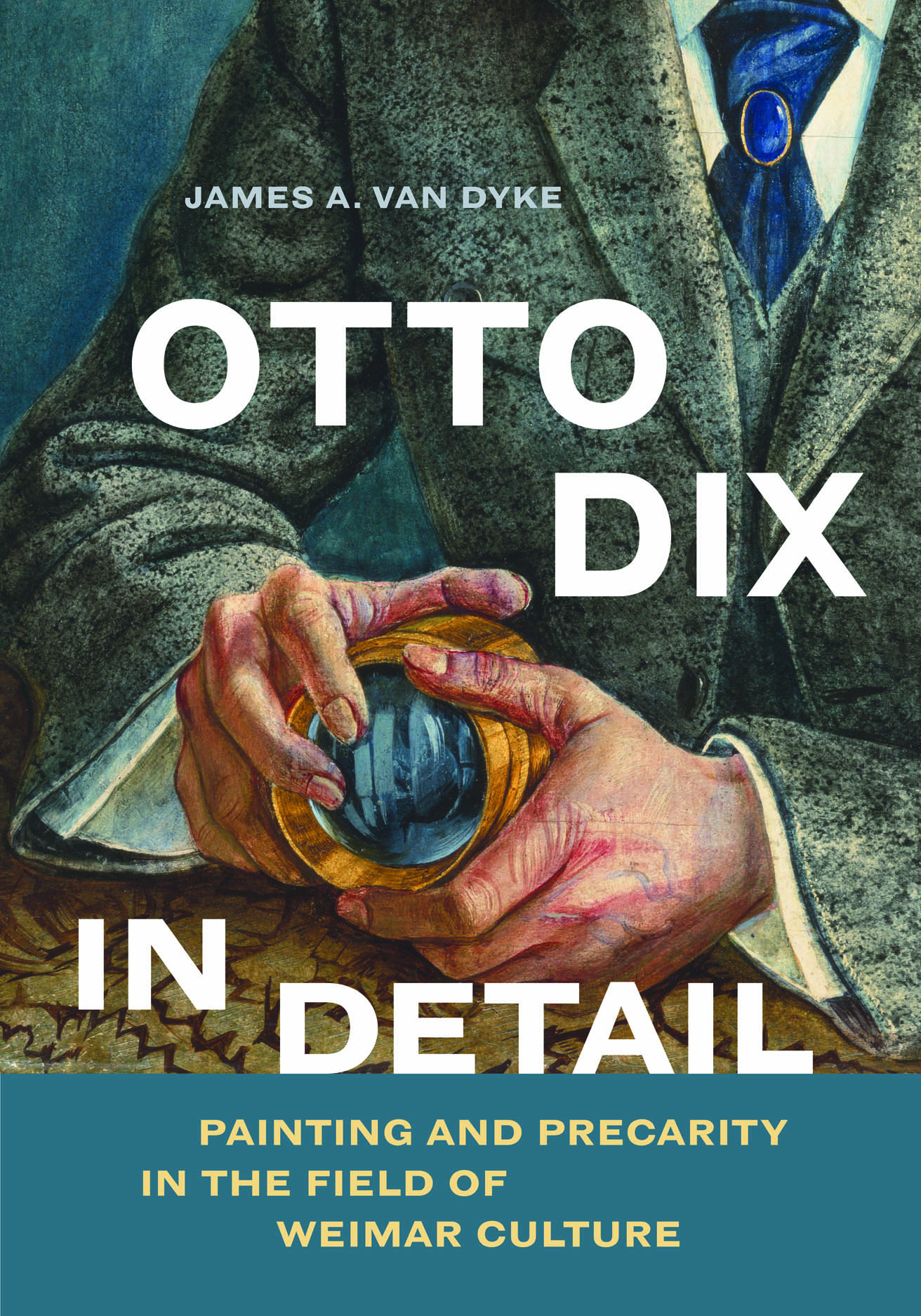
Otto Dix in Detail
Painting and Precarity in the Field of Weimar Culture
9780226848549
9780226848556
Otto Dix in Detail
Painting and Precarity in the Field of Weimar Culture
How small details in the paintings of Otto Dix materialize the realities of a modern German artist.
Offering a fresh look at German art during a period of extraordinary transition and precarity, James A. van Dyke focuses on overlooked but critically significant details in works completed by Otto Dix between 1919 and 1936. A small lump of paint, a monogram, an almost invisible self-portrait, the verso of a drawing, a patch of discoloration, and a web of fine cracks—van Dyke reveals such details, hidden in plain sight, as coded dialogue through which Dix addressed audiences and art-world insiders amid the combative world of cultural production in Weimar Germany. Sly, cutting, and provocative, these are the material traces of social relationships between the painter and those who represented threats to his professional ambition: an avant-garde mentor and rival, an increasingly skeptical critic, a prominent bourgeois photographer, and a local Nazi authority.
Proving that small things offer insight into the big picture, this book highlights Dix’s satirical, transgressive work as nuanced and polyvocal, reflecting the complex fields of power and economics in which the field of art is located.
Offering a fresh look at German art during a period of extraordinary transition and precarity, James A. van Dyke focuses on overlooked but critically significant details in works completed by Otto Dix between 1919 and 1936. A small lump of paint, a monogram, an almost invisible self-portrait, the verso of a drawing, a patch of discoloration, and a web of fine cracks—van Dyke reveals such details, hidden in plain sight, as coded dialogue through which Dix addressed audiences and art-world insiders amid the combative world of cultural production in Weimar Germany. Sly, cutting, and provocative, these are the material traces of social relationships between the painter and those who represented threats to his professional ambition: an avant-garde mentor and rival, an increasingly skeptical critic, a prominent bourgeois photographer, and a local Nazi authority.
Proving that small things offer insight into the big picture, this book highlights Dix’s satirical, transgressive work as nuanced and polyvocal, reflecting the complex fields of power and economics in which the field of art is located.
Reviews

Table of Contents
Introduction: Little Things in the Big Picture
Chapter 1. A Bit of Vulgarity: F***ing with Felixmüller
Chapter 2. The Monogram as Weapon: Taking Aim at Einstein
Chapter 3. Self-Portrait in a Convex Lens: Reflecting on Erfurth
Chapter 4. Recto and Verso: Revaluing Killinger’s Values
Conclusion: The Painter, the Policeman, and the Power of the Image
Acknowledgments
Notes
Selected Bibliography
Index