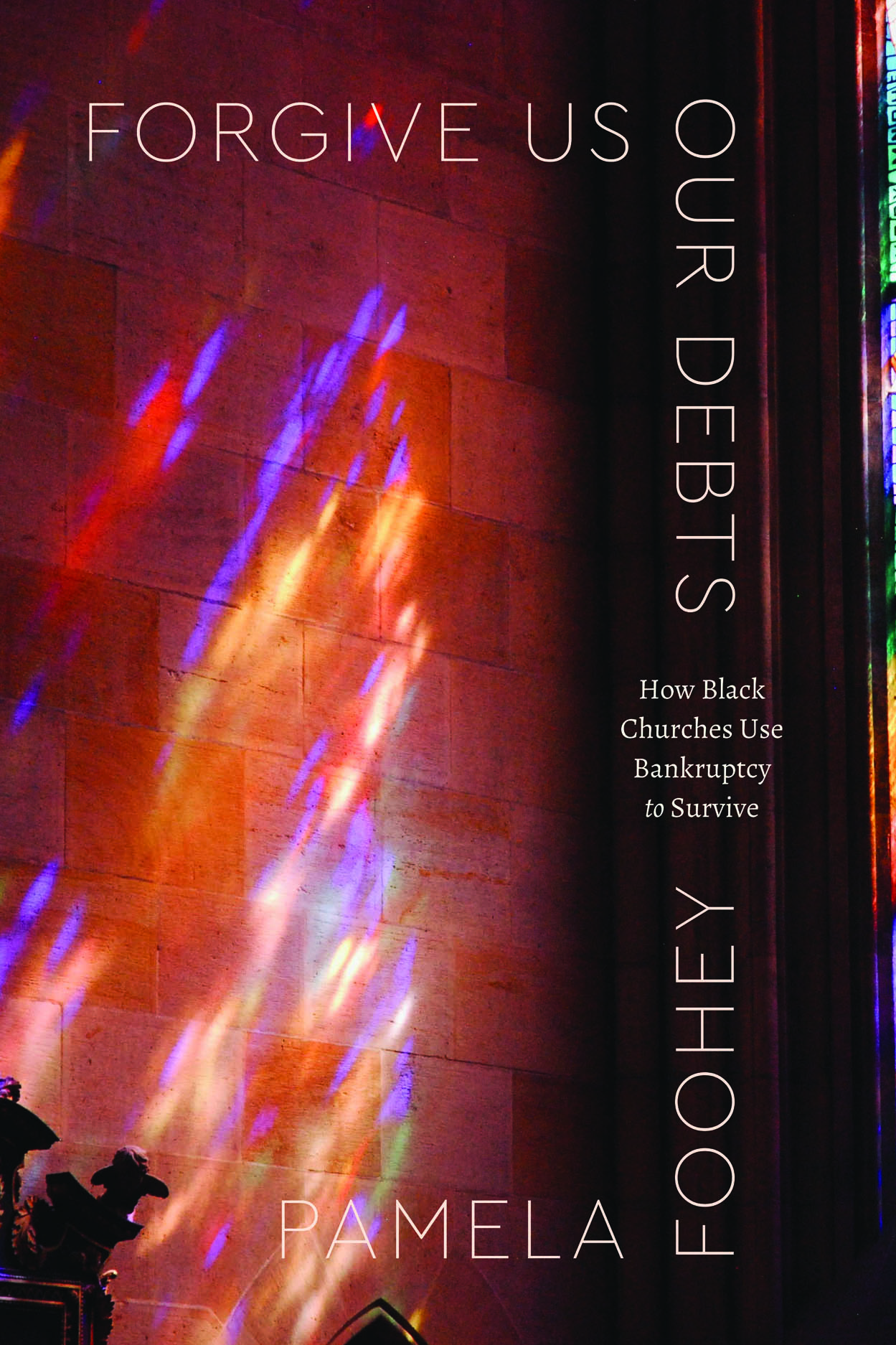
Forgive Us Our Debts
How Black Churches Use Bankruptcy to Survive
Forgive Us Our Debts
How Black Churches Use Bankruptcy to Survive
A revelatory study of how Black churches turn the financial system back against predatory lenders.
When American churches face financial difficulties, a disproportionately high number of Black churches reorganize under chapter 11 bankruptcy. There are no easy explanations for this distinction: not location, denomination, leadership structure, or the reasons for the loans. In Forgive Us Our Debts, legal scholar Pamela Foohey asks why, then, Black churches account for two-thirds of all congregations that file for chapter 11 bankruptcy every year.
Drawing on case studies of six Black churches and one white church, and 150 interviews with church leaders, members, and attorneys, Foohey finds answers in a long history of predatory lending. Unable to negotiate with recalcitrant loan officers, Black churches turn to the legal system to force reasonable concessions from lenders to prevent the stripping of their wealth and the destruction of their communities. While the structural discrimination remains, these churches have found in the bankruptcy system a refuge and some power to fight back.
288 pages | 9 halftones, 1 line drawings, 22 tables | 6 x 9
Class 200: New Studies in Religion
Economics and Business: Economics--Money and Banking
Law and Legal Studies: Law and Society
Religion: American Religions, Religion and Society
Reviews

Table of Contents
List of Illustrations
Introduction: Churches on the Brink of Failure
Part I: Churches and Financial Setbacks
1 Churches in Financial Crisis
2 The Path to Recovery
3 Please Forgive Us Our Debts
Part II: Bankruptcy as a Way to Deal with Stubborn Lenders
4 Deciding to File Bankruptcy
5 Journeying Through Reorganization
6 Making Deals and Confirming Plans
Part III: Reorganization as a Path to Black Churches’ Growth and Prosperity
7 The Benefits and Drawbacks of Reorganization
8 Thriving Postbankruptcy
Conclusion: Bankruptcy as a Pathway to Survival
Acknowledgments
Appendix: Methodology
Notes
Index