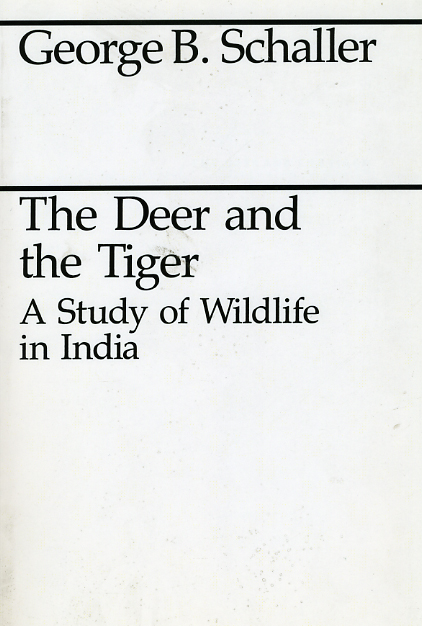
The Deer and the Tiger
9780226736310
9780226736570
The Deer and the Tiger
A classic work of natural history by a legendary, National Book Award-winning scientist and ecologist
The Deer and the Tiger is Geporge B. Schaller’s detailed account of the ecology and behavior of Bengal tigers and four species of the hoofed mammals on which they prey, based on extensive field observations in India’s Kanha National Park. Like all of Schaller’s classic books, it combines rich scientific knowledge with a remarkable ability to convey scene, setting, and incident. The result is a riveting account of wildlife in a region few of us will ever get to visit in person.
Reviews

Table of Contents
Part I - Introduction, Study Locations, and Methods
1. Introduction
2. Study Locations and Methods
Study Locations
Study Methods
Description of the Study Areas
Part II - The Hoofed Animals
3. The Chital
Description
Geographical and Ecological Distribution
Population Dynamics
General Behavior
Social Behavior
Comparisons with Hog Deer
4. The Barasingha
Description
Distribution and Status
Population Dynamics
General Behavior
Social Behavior
5. The Sambar
Description
Population Dynamics
General Behavior
Social Behavior
6. The Blackbuck
Description
Distribution and Status
Population Dynamics
General Behavior
Social Behavior
Comparisons with the Nilgai
7. The Gaur
Description
Distribution
Population Dynamics
General Behavior
Social Behavior
8. Ecological and Behavioral Comparisons
Biomass
Ecological Separation of Species
The Reproductive Season
Social Behavior
Communication of Danger
Part III - The Predators
9. The Tiger
Description
Distribution and Status
Population Dynamics
Ranges
Social Organization and Interactions Between Adults
Communication
Behavior of Female and Young
Food Habits and Hunting, Killing, and Feeding Behavior
Response to Man
10. Other Predators
Leopard
Jungle Cat
Sloth Bear
Striped Hyena
Wild Dog
Bengal Fox
Jackal
Python
11. The Effects of Predation on the Prey Populations in Kanha Park
Appendix A
References Cited
Acknowledgments
Index
1. Introduction
2. Study Locations and Methods
Study Locations
Study Methods
Description of the Study Areas
Part II - The Hoofed Animals
3. The Chital
Description
Geographical and Ecological Distribution
Population Dynamics
General Behavior
Social Behavior
Comparisons with Hog Deer
4. The Barasingha
Description
Distribution and Status
Population Dynamics
General Behavior
Social Behavior
5. The Sambar
Description
Population Dynamics
General Behavior
Social Behavior
6. The Blackbuck
Description
Distribution and Status
Population Dynamics
General Behavior
Social Behavior
Comparisons with the Nilgai
7. The Gaur
Description
Distribution
Population Dynamics
General Behavior
Social Behavior
8. Ecological and Behavioral Comparisons
Biomass
Ecological Separation of Species
The Reproductive Season
Social Behavior
Communication of Danger
Part III - The Predators
9. The Tiger
Description
Distribution and Status
Population Dynamics
Ranges
Social Organization and Interactions Between Adults
Communication
Behavior of Female and Young
Food Habits and Hunting, Killing, and Feeding Behavior
Response to Man
10. Other Predators
Leopard
Jungle Cat
Sloth Bear
Striped Hyena
Wild Dog
Bengal Fox
Jackal
Python
11. The Effects of Predation on the Prey Populations in Kanha Park
Appendix A
References Cited
Acknowledgments
Index