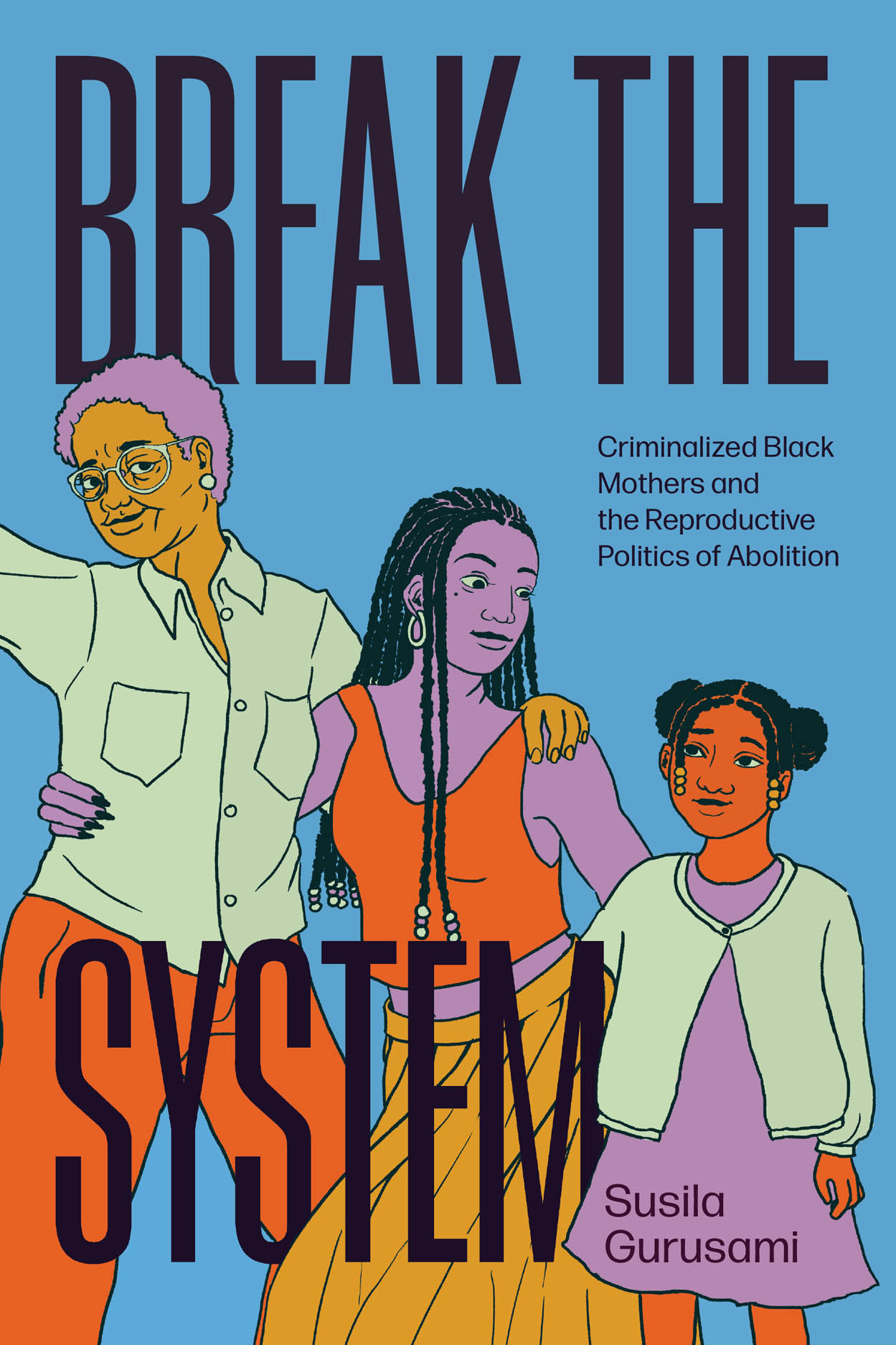
Break the System
Criminalized Black Mothers and the Reproductive Politics of Abolition
Break the System
Criminalized Black Mothers and the Reproductive Politics of Abolition
Upends the “broken systems” myth and reveals how the law deliberately criminalizes and punishes Black women, inflicting lasting harm on Black communities in the process.
The United States has one of the highest rates of incarceration in the world, with Black Americans representing a disproportionate share of theimprisoned. Many view this statistic as evidence of a broken system. But sociologist Susila Gurusami argues that the carceral system that so disproportionately harms Black families is not broken at all. In fact, it works just as it was intended. Looking closely at the lives of formerly incarcerated Black mothers, Gurusami shows how state institutions—the criminal-legal, child welfare, and healthcare systems—keep Black mothers from their families, harming Black communities in the process. She also shows how Black women work towards conditions that seem impossible—and even utopian—as part of their everyday mothering labor, but find themselves criminalized for these same actions.
Drawing on ethnographic data and interviews with formerly incarcerated Black women in South Los Angeles, Gurusami challenges dominant assumptions about mothering and criminal justice reform. Gurusami finds that criminalized Black women endure multigenerational political, social, and embodied assaults–what she calls “reproductive warfare”— and still, they build networks, practices, and theories of radical care that protect Black maternal life, legacies, and futures. With incarcerated, formerly incarcerated, and system-impacted Black mothers at the forefront of the growing movement to abolish prisons and jails, Gurusami demonstrates how their everyday mothering work—what she calls “abolitionist motherwork”—is essential to imagining the end of incarceration and ultimately achieving it.
Written with a tender and honest voice, Break the System shares moving vignettes that underscore why we must break the system, rather than reform it, and why we must imagine a future that is radically different than the one we’re told we must accept or salvage.
240 pages | 6 x 9 | © 2026
Sociology: Criminology, Delinquency, Social Control, Race, Ethnic, and Minority Relations, Sociology--Marriage and Family
Reviews

Table of Contents
Introduction
1. Memory: Robbing and Preserving the Archive
2. The Mastermind: Criminalizing Survivors of Gendered Violence
3. The Mindless: Governing Mental Hellcare in Jails and Prisons
4. Resisting Reproductive Warfare: Gender Responsiveness as Gendered Violence
5. Maternal Conjuring: Black Mothers Matter
6. Maternal Agency: Accountability, Choice, and Responsibility
Conclusion: Nothing Is Impossible
Acknowledgments
Notes
Bibliography
Index